
Formation of Earth and the Origins of Life
About This Course
“`html
Formation of Earth and the Origins of Life
Introduction and Learning Objectives
The story of Earth’s formation and the origin of life represents one of the most fascinating frontiers in science. This course provides an in-depth exploration of the processes that led to the formation of our planet around 4.5 billion years ago and the complex chemical and environmental conditions that eventually gave rise to life.
Through a combination of geological, chemical, and biological perspectives, students will gain expertise in the timeline of Earth’s early history, the hypotheses explaining life’s emergence, and the latest research in astrobiology and synthetic biology. The course content balances fundamental knowledge with advanced concepts, equipping learners with the tools to critically analyze origin-of-life research.
Learning Objectives
- Understand the timeline and major processes involved in Earth’s formation.
- Analyze the environmental and chemical conditions of early Earth that enabled life to emerge.
- Compare and contrast abiogenesis and panspermia theories for life’s origins.
- Explore the chemical evolution from simple molecules to complex biomolecules and protocells.
- Evaluate geochemical and fossil evidence supporting early life forms and metabolic evolution.
- Apply advanced concepts such as thermodynamics of prebiotic chemistry and molecular phylogenetics.
- Engage with laboratory and field methods used to study early Earth and the origin of life.
Course Structure
Topics and Lessons
- Topic 1: Formation of the Solar System and Earth
- Lesson 1.1: Nebular Hypothesis and Accretion Processes
- Lesson 1.2: Radiometric Dating and Earth’s Age
- Topic 2: Early Earth Environment
- Lesson 2.1: Hadean and Archean Eons Overview
- Lesson 2.2: Atmospheric and Oceanic Conditions
- Lesson 2.3: Role of Volcanism and Hydrothermal Activity
- Topic 3: Prebiotic Chemistry and Origin of Life Theories
- Lesson 3.1: Miller-Urey Experiment and Prebiotic Molecules
- Lesson 3.2: Abiogenesis vs. Panspermia
- Lesson 3.3: Chemical Evolution to Polymers
- Topic 4: Emergence of Life and Early Biological Systems
- Lesson 4.1: Protocells and the RNA World Hypothesis
- Lesson 4.2: First Evidence of Life: Stromatolites and Isotopic Signatures
- Lesson 4.3: Evolution of Metabolic Pathways and Photosynthesis
- Topic 5: Advanced Concepts and Applications
- Lesson 5.1: Thermodynamics and Kinetics of Prebiotic Chemistry
- Lesson 5.2: Mineral Surfaces and Hydrothermal Vents
- Lesson 5.3: Molecular Phylogenetics and LUCA
- Lesson 5.4: Astrobiology and Synthetic Biology Approaches
Quizzes and Assignments
- Quiz after each topic to reinforce key concepts.
- Assignments include critical review essays, laboratory simulation reports, and data analysis of geochemical evidence.
- Final project: Design an origin-of-life experimental model or a research proposal on early Earth conditions.
Main Content
1. Formation of the Solar System and Earth
Earth formed approximately 4.54 billion years ago as part of the solar system’s formation from a collapsing molecular cloud, according to the nebular hypothesis. Dust and gas coalesced through a process called accretion, creating planetesimals that collided and merged into protoplanets. Our planet’s differentiation into core, mantle, and crust was driven by heat from radioactive decay and kinetic energy of impacts.
Radiometric dating—especially uranium-lead methods—are essential for determining Earth’s age. Zircon crystals from Australia have provided some of the oldest physical evidence of Earth’s crust, confirming formation dates around 4.4 billion years ago.
2. Early Earth Environment: Hadean and Archean Eons
The Hadean eon (~4.5–4.0 Ga) was marked by high temperatures, frequent volcanic activity, and a largely molten surface. Earth’s early atmosphere was likely reducing or neutral, composed mainly of volcanic gases like water vapor (H2O), carbon dioxide (CO2), nitrogen (N2), methane (CH4), and ammonia (NH3). Oceans began to form as the planet cooled, providing a vast chemical reactor for prebiotic reactions.
The Archean eon (~4.0–2.5 Ga) saw stabilization of the crust and the first evidence of life. The atmosphere remained anoxic, but the presence of hydrothermal vents and mineral surfaces provided niches where complex chemistry could evolve.
3. Prebiotic Chemistry and Theories on the Origin of Life
The famous Miller-Urey experiment (1953) demonstrated that simple organic molecules such as amino acids could form under simulated early Earth conditions, supporting the plausibility of abiogenesis—the natural emergence of life from non-living matter. However, the exact pathway from small molecules to living organisms remains a profound scientific challenge.
Two main hypotheses dominate origin-of-life research:
- Abiogenesis: Life originated independently on Earth through chemical evolution.
- Panspermia: Life or its precursors arrived from extraterrestrial sources, possibly via meteorites or comets.
While panspermia shifts the question of life’s origin beyond Earth, it is not mutually exclusive with abiogenesis, and both hypotheses are actively researched.
The formation of simple organic molecules and polymers such as nucleotides, peptides, and lipids was critical. These molecules may have self-assembled into protocells, enclosing catalytic RNAs or peptides within lipid membranes.
4. Emergence of Life and Early Biological Systems
The RNA world hypothesis posits that RNA molecules acted as both genetic material and catalysts before DNA and proteins took over these roles. This concept is supported by the discovery of ribozymes—RNA molecules with enzymatic activity.
The earliest fossil evidence of life includes stromatolites, layered sedimentary structures created by microbial mats, dated to roughly 3.5 billion years ago. Isotopic signatures, such as carbon isotope ratios, also indicate biological activity during the Archean.
Early life evolved metabolic pathways, including anaerobic respiration and eventually photosynthesis. The development of oxygenic photosynthesis by cyanobacteria dramatically altered Earth’s atmosphere, leading to the Great Oxidation Event ~2.4 billion years ago.
5. Advanced Concepts and Applications
Understanding prebiotic chemistry requires rigorous study of thermodynamics and kinetics to determine which reactions are plausible under early Earth conditions. Mineral surfaces such as clays and iron-sulfur compounds may have catalyzed polymerization reactions.
Hydrothermal vents provide a unique environment rich in chemical gradients and energy sources, potentially crucial for early metabolic processes. These settings are studied intensively through deep-sea exploration and laboratory simulations.
Molecular phylogenetics reconstructs the evolutionary relationships among organisms, shedding light on the Last Universal Common Ancestor (LUCA). LUCA likely possessed key molecular machinery shared across all domains of life.
Synthetic biology techniques aim to recreate or simulate origin-of-life scenarios, helping validate hypotheses and expanding our understanding of life’s flexibility. Astrobiological research draws on this knowledge to design instruments for detecting life on Mars and icy moons.
Real-World Examples and Case Studies
Example 1: Radiometric Dating of Jack Hills Zircons
Researchers studying zircon crystals from Jack Hills, Western Australia, have dated Earth’s crust formation to at least 4.4 billion years ago, pushing back the timeline of Earth’s solid surface and providing a window into Hadean conditions. This discovery is pivotal for understanding the early environment where life could have originated.
Example 2: Miller-Urey Experiment and Its Legacy
The 1953 Miller-Urey experiment simulated early Earth’s atmospheric composition and electrical storms, producing amino acids and organic compounds. Subsequent experiments have refined and expanded upon this work to include varied atmospheric conditions and energy sources, continuously shaping our understanding of prebiotic chemistry.
Example 3: Discovery of Stromatolites in Greenland
Fossil stromatolites from Isua, Greenland, dated to approximately 3.7 billion years ago, provide some of the oldest evidence for life on Earth. Their layered structures support the existence of microbial communities early in Earth’s history, informing our models of life’s resilience and adaptability.
Example 4: Hydrothermal Vent Research in the Pacific Ocean
Exploration of hydrothermal vent systems along the Pacific Ocean’s mid-ocean ridges has revealed complex ecosystems reliant on chemosynthesis. These environments serve as analogs for early Earth habitats and potential extraterrestrial life niches, influencing hypotheses about life’s origin.
Practical Exercises and Assignments
Exercise 1: Timeline Construction of Earth’s Formation
Create a detailed timeline illustrating major events from solar system formation to the emergence of early life, integrating radiometric dating data.
Exercise 2: Laboratory Simulation Report
Conduct or review a simulation of prebiotic chemistry (e.g., Miller-Urey style experiment) and analyze the results, focusing on yields of organic compounds and their significance.
Assignment 1: Critical Review Essay
Write an essay comparing abiogenesis and panspermia theories, evaluating their strengths, weaknesses, and supporting evidence.
Assignment 2: Data Analysis of Isotopic Evidence
Analyze a dataset of carbon isotopes from Archean rocks to identify signatures consistent with biological activity.
Final Project: Experimental Design Proposal
Design a conceptual experiment or model to test a specific origin-of-life hypothesis, detailing methodology, expected outcomes, and potential challenges.
Quiz Questions
- What is the nebular hypothesis in the context of Earth’s formation?
- During which eons did the Earth’s atmosphere remain largely anoxic?
- What key molecules were produced in the Miller-Urey experiment?
- Describe two main hypotheses explaining the origin of life on Earth.
- What is the RNA world hypothesis and why is it significant?
- How do stromatolites provide evidence for early life?
- Why are hydrothermal vents considered important in origin-of-life research?
- What does LUCA stand for, and why is it central to molecular phylogenetics?
- Explain how radiometric dating techniques help determine Earth’s age.
- Identify one major challenge in experimentally replicating origin-of-life processes and a possible solution.
Summary and Next Steps
The formation of Earth and the origins of life remain central questions that connect geology, chemistry, and biology. This course has traversed the vast timeline from cosmic dust to self-replicating molecules, highlighting the complex interplay between planetary evolution and biochemical innovation.
As you advance, consider focusing on interdisciplinary research approaches, combining laboratory simulation, fieldwork, and computational models to unravel remaining mysteries. Engage actively with current literature, join seminars or workshops in astrobiology or synthetic biology, and explore opportunities for hands-on research to deepen your expertise.
Next steps include:
- Participate in laboratory workshops simulating early Earth conditions.
- Explore molecular phylogenetics software tools to analyze evolutionary relationships.
- Read and review landmark scientific papers on prebiotic chemistry and early life evidence.
- Engage with astrobiology initiatives and space mission data related to life detection.
References
-
Dalrymple, G. B. (2001). The Age of the Earth. Stanford University Press.
https://pangea.stanford.edu/research/earth-age -
Miller, S. L. (1953). A Production of Amino Acids Under Possible Primitive Earth Conditions. Science, 117(3046), 528–529.
https://science.sciencemag.org/content/117/3046/528 -
Nisbet, E. G., & Sleep, N. H. (2001). The habitat and nature of early life. Nature, 409(6823), 1083–1091.
https://www.nature.com/articles/35059210 -
Westall, F., et al. (2018). The Astrobiology Field Laboratory (AFL): A Mission to the Early Earth and Beyond. Astrobiology, 18(12), 1399-1421.
https://www.liebertpub.com/doi/10.1089/ast.2017.1743 -
Martin, W., & Russell, M. J. (2007). On the origin of biochemistry at an alkaline hydrothermal vent. Philosophical Transactions of the Royal Society B, 362(1486), 1887-1925.
https://royalsocietypublishing.org/doi/10.1098/rstb.2006.1881
“`
Learning Objectives
Material Includes
- Comprehensive video lessons
- Practice exercises and quizzes
- Downloadable study materials
- Certificate of completion
Requirements
- a:2:{i:0;s:39:"Basic understanding of the subject area";i:1;s:33:"Willingness to learn and practice";}
Curriculum
Introduction to Formation of Earth and the Ori
Core Formation of Earth and the Ori Principles
Formation of Earth and the Ori in Practice
Formation of Earth and the Ori Mastery
Your Instructors

Education Shop
See more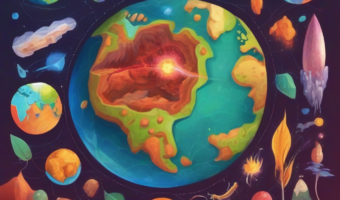
Material Includes
- Comprehensive video lessons
- Practice exercises and quizzes
- Downloadable study materials
- Certificate of completion