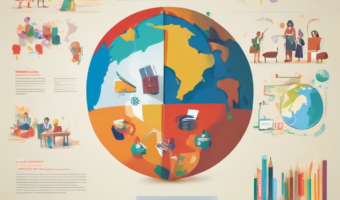
Global Culture

About This Course

# Understanding Global Culture in the 21st Century

## Introduction: What is Global Culture?

In an increasingly interconnected world, the concept of a “global culture” has emerged as a significant area of study and discussion. But what exactly is global culture? At its core, **global culture refers to the shared experiences, norms, symbols, and ideas that unite people at a global level.** [1] It is a product of globalization, the process of interaction and integration among people, companies, and governments worldwide. As we navigate the complexities of the 21st century, understanding the dynamics of global culture is no longer a niche academic pursuit but a crucial component of global citizenship and effective cross-cultural communication. [2]

The rise of a globalized world, facilitated by advancements in technology, transportation, and communication, has accelerated the transmission of cultural ideas, values, and practices across borders. This has led to both the celebration of cultural diversity and concerns about the potential for cultural homogenization. This course will provide a comprehensive exploration of global culture, examining its various facets, the forces that shape it, and its impact on societies and individuals.

## Key Concepts in Global Culture

To fully grasp the complexities of global culture, it is essential to understand several key concepts that are central to the discourse. These concepts provide a framework for analyzing the multifaceted nature of cultural globalization.

### Cultural Diversity and Homogenization

Cultural diversity refers to the existence of a variety of cultural or ethnic groups within a society. In a global context, it represents the multiplicity of cultures that exist worldwide. One of the primary debates surrounding global culture is the tension between cultural diversity and **cultural homogenization**, the process by which local cultures are transformed or absorbed by a dominant outside culture. [3] Critics of globalization often express concerns about the erosion of unique cultural identities in the face of a powerful, Western-centric global culture, a phenomenon sometimes referred to as “Americanization” or “Westernization.” [4]

### Cultural Hybridization

In contrast to the idea of homogenization, **cultural hybridization** suggests that globalization does not necessarily lead to the erasure of local cultures but rather to the creation of new, hybrid cultural forms. This perspective emphasizes the agency of local cultures to adapt, mix, and innovate in response to global cultural flows. [5] Jan Pieterse, a prominent theorist in this area, argues that hybridization has been a long-standing historical process, evident in the cultural mixing that has occurred across continents for centuries. [6]

### Cultural Imperialism

**Cultural imperialism** is a theory that suggests that the cultural dominance of one nation over others is a form of imperialism. This concept is often used to critique the influence of Western, particularly American, culture on the rest of the world. The global spread of Western media, consumer goods, and values is seen by some as a threat to the cultural sovereignty of non-Western nations. [3]

## Exploring Global Cultures: Regional Perspectives

To appreciate the richness and diversity of global culture, it is helpful to examine different regional cultures and their unique contributions to the global tapestry. Drawing inspiration from the interdisciplinary approach of institutions like New York University, we can explore the cultural dynamics of various regions. [7]

* **African Cultures:** The African continent is home to a vast diversity of peoples, languages, and cultures. From the ancient civilizations of Egypt and Nubia to the vibrant contemporary arts scenes in Lagos and Johannesburg, African cultures have a rich and complex history. The legacies of colonialism and the transatlantic slave trade have had a profound impact on the continent, shaping its political, social, and cultural landscapes.

* **Caribbean Cultures:** The Caribbean is a region of immense cultural diversity, with influences from Africa, Europe, and indigenous populations. The shared history of slavery and colonialism has forged a unique regional identity, expressed through music, literature, and religious practices. The Caribbean diaspora has also played a significant role in shaping global culture, particularly in cities like London, New York, and Toronto.

* **East Asian Cultures:** East Asia, comprising China, Japan, and Korea, has a long and influential history of cultural exchange and development. The region has been a source of major philosophical and religious traditions, including Confucianism, Taoism, and Buddhism. In the modern era, East Asia has become a powerhouse of economic and cultural production, with its pop culture, cuisine, and technological innovations having a global impact.

* **Indigenous Cultures:** Indigenous cultures around the world represent a vital source of knowledge, tradition, and resilience. From the Amazon rainforest to the Arctic Circle, indigenous peoples have maintained their unique cultural identities in the face of colonization and globalization. The struggle for indigenous rights and self-determination is a crucial aspect of contemporary global politics.

* **Latin American Cultures:** Latin America is a region of incredible cultural and linguistic diversity, with a complex history of interaction between indigenous, European, and African peoples. The region has produced a wealth of artistic and literary traditions, from the magical realism of Gabriel García Márquez to the vibrant murals of Diego Rivera. The ongoing process of cultural mixing and adaptation continues to shape the dynamic cultures of Latin America.

* **Middle Eastern Cultures:** The Middle East, a cradle of civilizations, has a rich and complex cultural heritage. The region is the birthplace of three major world religions—Judaism, Christianity, and Islam—and has been a center of scientific, artistic, and philosophical innovation for centuries. The contemporary Middle East is a region of great diversity and dynamism, with its cultures and societies constantly evolving in response to both internal and external forces.

* **South Asian Cultures:** South Asia, which includes India, Pakistan, Bangladesh, Nepal, and Sri Lanka, is a region of immense cultural, linguistic, and religious diversity. The Indian subcontinent has been a major center of civilization for millennia, giving rise to major religions such as Hinduism, Buddhism, Jainism, and Sikhism. The region’s rich artistic traditions, including its music, dance, and cinema, have gained global recognition.

## Theories of Cultural Globalization

Scholars have proposed various theories to explain the dynamics of cultural globalization. These theories offer different perspectives on the processes of cultural exchange, interaction, and transformation in a globalized world.

### World-Systems Theory

Developed by sociologist Immanuel Wallerstein, **World-Systems Theory** views the world as a single, integrated economic system. This system is divided into a core, a periphery, and a semi-periphery. The core countries, which are the most economically developed, exert their influence over the periphery and semi-periphery countries. From a cultural perspective, this theory suggests that the culture of the core countries tends to dominate and influence the cultures of the periphery.

### Hybridization and Glocalization

As mentioned earlier, the theory of **hybridization** posits that globalization leads to the creation of new, hybrid cultural forms. A related concept is **glocalization**, which refers to the adaptation of global products and services to local cultures. This concept highlights the two-way nature of cultural exchange, where global forces are localized and local cultures are globalized.

## The Impact of Globalization on Culture

The impact of globalization on culture is a complex and multifaceted issue that continues to generate significant scholarly debate. While globalization has undoubtedly led to increased cultural exchange and understanding, it has also raised concerns about the loss of cultural diversity and the rise of a homogenized global culture.

### The Role of Media and Technology

The role of media and technology has been particularly significant in shaping the cultural landscape of the 21st century. The internet, social media platforms such as YouTube, Spotify, and various social media networks have created new platforms for cultural expression and exchange. [3] These digital technologies have democratized cultural production, allowing individuals from diverse backgrounds to share their personal cultures and be exposed to those of others. However, they have also been criticized for promoting a Western-centric worldview and facilitating the spread of a homogenized consumer culture.

The rise of streaming services and social media has transformed how people consume and interact with culture. Music, films, television shows, and other forms of entertainment can now be accessed instantly from anywhere in the world. This has led to the global popularity of certain cultural products, such as K-pop, Bollywood films, and American television series. While this increased accessibility has fostered greater cultural awareness, it has also raised questions about the dominance of certain cultural forms and the potential marginalization of others.

### Economic Factors and Cultural Exchange

Economic globalization has been a major driver of cultural exchange. The growth of international trade, the expansion of multinational corporations, and the increasing mobility of capital have all contributed to the spread of cultural products and practices across borders. Macroregions such as the European Union and the North American Free Trade Agreement have facilitated increased cultural homogeneity through the flow of commerce. [3]

From a supply-side perspective, technological advancements have enabled artists and cultural producers to distribute their work more easily across borders. From a demand-side perspective, wealthy consumers, particularly in Western countries, have driven the market for art and cultural products from less developed nations. This has led to both opportunities and challenges for cultural producers in different parts of the world.

### Tourism and Immigration

Tourism and immigration have also played significant roles in cultural globalization. The ease of international travel has made it possible for people to experience different cultures firsthand, fostering greater understanding and appreciation. However, mass tourism can also lead to the commodification of culture, where local traditions and practices are packaged and sold to tourists, sometimes resulting in a loss of authenticity.

Immigration has had a profound impact on the cultural demographics of many countries. The movement of people across borders has led to the creation of diverse, multicultural societies. While this diversity can be a source of strength and innovation, it has also led to tensions and conflicts, particularly in countries where there is resistance to cultural change. The 2015 European migrant crisis, for example, significantly shifted the demographics of the region and led to increased xenophobic sentiment in some areas. [3]

### Cultural Products and Consumer Culture

The global spread of consumer culture is one of the most visible aspects of cultural globalization. American fast-food chains such as McDonald’s and Starbucks have become ubiquitous symbols of globalization, with tens of thousands of locations operating worldwide. [3] The Big Mac Index, an informal measure of purchasing power parity, illustrates the global reach of American consumer culture.

However, the spread of consumer culture is not a one-way process. Local cultures often adapt and transform global products to suit their own tastes and preferences, a process known as glocalization. For example, McDonald’s offers different menu items in different countries to cater to local culinary traditions. This demonstrates that cultural globalization is not simply about the imposition of Western culture on the rest of the world but also involves a complex process of adaptation and negotiation.

## Developing Global Competence

In a globalized world, **global competence** is an essential skill for individuals and societies. As outlined by institutions like the University of Kansas, global competence involves the ability to understand different cultural perspectives, communicate effectively across cultures, appreciate cultural differences, and engage in respectful and responsible action in a global context. [2]

Developing global competence requires a commitment to lifelong learning, an open and curious mindset, and a willingness to challenge one’s own assumptions and biases. It involves not only acquiring knowledge about different cultures but also developing the skills and attitudes necessary to interact effectively in a multicultural environment.

### Key Components of Global Competence

Global competence encompasses several key components that are essential for navigating the complexities of our interconnected world. First, **cultural awareness** involves recognizing and understanding the values, beliefs, and practices of different cultures. This requires moving beyond stereotypes and developing a nuanced appreciation for cultural diversity.

Second, **intercultural communication skills** are crucial for effective interaction across cultural boundaries. This includes the ability to listen actively, communicate clearly, and adapt one’s communication style to different cultural contexts. It also involves being aware of nonverbal communication cues, which can vary significantly across cultures.

Third, **critical thinking and reflection** are essential for analyzing complex global issues and understanding different perspectives. This involves questioning one’s own assumptions, examining the sources of information, and considering multiple viewpoints before forming judgments.

Finally, **empathy and respect** are fundamental attitudes that underpin global competence. This involves recognizing the inherent dignity and worth of all people, regardless of their cultural background, and being willing to engage in dialogue and collaboration with those who hold different views.

## Case Studies in Global Culture

To illustrate the concepts and theories discussed in this course, it is helpful to examine specific case studies that highlight the dynamics of cultural globalization in action.

### Case Study 1: The Global Spread of Hip-Hop Culture

Hip-hop culture, which originated in the African American communities of New York City in the 1970s, has become a global phenomenon. From its roots in the Bronx, hip-hop has spread to virtually every corner of the world, influencing music, fashion, language, and social movements. The global spread of hip-hop demonstrates both the processes of cultural imperialism and hybridization. While some critics argue that the commercialization of hip-hop represents a form of cultural appropriation and commodification, others point to the ways in which local communities have adapted and transformed hip-hop to express their own identities and concerns.

In countries such as France, Brazil, and South Africa, hip-hop has been used as a tool for social and political activism, addressing issues such as poverty, racism, and inequality. This demonstrates the capacity of cultural forms to transcend their origins and become vehicles for local expression and resistance.

### Case Study 2: The Globalization of Food Culture

Food is one of the most tangible and accessible aspects of culture, and the globalization of food culture provides a rich area for analysis. The spread of cuisines such as Italian, Chinese, and Mexican food around the world has made these culinary traditions familiar to people in diverse cultural contexts. However, this process of culinary globalization is not without its complexities.

On one hand, the global availability of diverse cuisines has enriched the culinary landscape and provided opportunities for cultural exchange and appreciation. On the other hand, the commercialization and standardization of ethnic cuisines can lead to a loss of authenticity and a dilution of culinary traditions. The phenomenon of “fusion cuisine,” which combines elements from different culinary traditions, exemplifies the process of cultural hybridization.

### Case Study 3: The Impact of Social Media on Cultural Identity

Social media platforms such as Facebook, Instagram, and TikTok have transformed the ways in which people construct and express their cultural identities. These platforms provide spaces for individuals to share their cultural practices, connect with others who share similar backgrounds, and engage in cross-cultural dialogue. However, social media also presents challenges, including the spread of misinformation, the amplification of cultural stereotypes, and the potential for online harassment and hate speech.

The use of social media by diaspora communities is particularly noteworthy. These platforms enable individuals who have migrated to maintain connections with their home cultures and to participate in transnational cultural networks. At the same time, social media can facilitate the creation of new, hybrid identities that blend elements from multiple cultural traditions.

## Challenges and Opportunities in a Globalized World

The process of cultural globalization presents both challenges and opportunities for individuals, communities, and societies. Understanding these challenges and opportunities is essential for navigating the complexities of our interconnected world.

### Challenges

One of the primary challenges of cultural globalization is the potential for **cultural homogenization**, where diverse local cultures are replaced by a uniform global culture. This can lead to a loss of cultural diversity and the erosion of unique cultural identities. The dominance of Western, particularly American, culture in global media and consumer markets is a major concern for many scholars and activists.

Another challenge is the potential for **cultural conflict and misunderstanding**. As people from different cultural backgrounds come into contact with one another, there is a risk of miscommunication, stereotyping, and prejudice. These tensions can be exacerbated by economic inequality, political instability, and historical grievances.

The **commodification of culture** is another significant challenge. When cultural practices and traditions are packaged and sold as consumer products, there is a risk that they will lose their meaning and authenticity. This is particularly evident in the tourism industry, where local cultures are often presented in simplified and stereotypical ways to appeal to tourists.

### Opportunities

Despite these challenges, cultural globalization also presents significant opportunities. One of the most important opportunities is the potential for **increased cultural exchange and understanding**. By learning about and engaging with different cultures, individuals can develop greater empathy, tolerance, and respect for diversity.

Cultural globalization also creates opportunities for **innovation and creativity**. The mixing and blending of different cultural traditions can lead to the creation of new art forms, musical genres, and culinary innovations. This process of cultural hybridization can enrich the cultural landscape and provide new avenues for creative expression.

Finally, cultural globalization can facilitate **global collaboration and solidarity**. By recognizing our shared humanity and common challenges, people from different cultural backgrounds can work together to address global issues such as climate change, poverty, and inequality. The development of a global consciousness, grounded in respect for cultural diversity, is essential for building a more just and sustainable world.

## Conclusion: The Future of Global Culture

The future of global culture is likely to be characterized by a continued tension between the forces of homogenization and hybridization. While the spread of a global consumer culture is undeniable, local cultures continue to demonstrate remarkable resilience and creativity. The ongoing evolution of global culture will be shaped by a variety of factors, including technological innovation, economic development, and political change. By embracing the challenges and opportunities of our interconnected world, we can work towards a future where cultural diversity is celebrated and a truly global community can flourish.

## References

[1] Simplicable. (2023, July 5). *17 Examples of Global Culture*. [https://simplicable.com/culture/global-culture](https://simplicable.com/culture/global-culture)

[2] The University of Kansas. (n.d.). *Global Culture | KU Core 34*. [https://kucore.ku.edu/global-culture](https://kucore.ku.edu/global-culture)

[3] Wikipedia. (n.d.). *Cultural globalization*. [https://en.wikipedia.org/wiki/Cultural_globalization](https://en.wikipedia.org/wiki/Cultural_globalization)

[4] Study.com. (n.d.). *Cultural Globalization: Definition, Factors & Effects*. [https://study.com/academy/lesson/cultural-globalization-definition-factors-effects.html](https://study.com/academy/lesson/cultural-globalization-definition-factors-effects.html)

[5] Pieterse, J. N. (2015). *Globalization and culture: Global mélange*. Rowman & Littlefield.

[6] EBSCO. (n.d.). *Global Culture | Research Starters*. [https://www.ebsco.com/research-starters/social-sciences-and-humanities/global-culture](https://www.ebsco.com/research-starters/social-sciences-and-humanities/global-culture)

[7] New York University. (n.d.). *Global Cultures*. [https://liberalstudies.nyu.edu/academics/core-program-curriculum/global-cultures.html](https://liberalstudies.nyu.edu/academics/core-program-curriculum/global-cultures.html)

## Embedded Videos

To further enhance your understanding of global culture, please watch the following videos. They provide insightful perspectives on the key concepts and debates we have discussed.

### Globalization and Culture

This video from Introduction to Sociology provides an excellent overview of the cultural dimensions of globalization from a sociological perspective.

### Cultures of the World

This video from Learn Bright offers a fun and engaging overview of the world’s cultures, perfect for a general introduction to the topic.

Learning Objectives

Learn Global Culture fundamentals
Master key concepts and techniques
Apply knowledge through practice exercises
Build confidence in the subject matter

Material Includes

  • Comprehensive video lessons
  • Practice exercises and quizzes
  • Downloadable study materials
  • Certificate of completion

Requirements

  • a:2:{i:0;s:39:"Basic understanding of the subject area";i:1;s:33:"Willingness to learn and practice";}

Curriculum

8 Lessons

Your Instructors

Education Shop

4.94/5
32352 Courses
18 Reviews
130775 Students
See more
Select the fields to be shown. Others will be hidden. Drag and drop to rearrange the order.
  • Image
  • SKU
  • Rating
  • Price
  • Stock
  • Availability
  • Add to cart
  • Description
  • Content
  • Weight
  • Dimensions
  • Additional information
Click outside to hide the comparison bar
Compare

Don't have an account yet? Sign up for free